

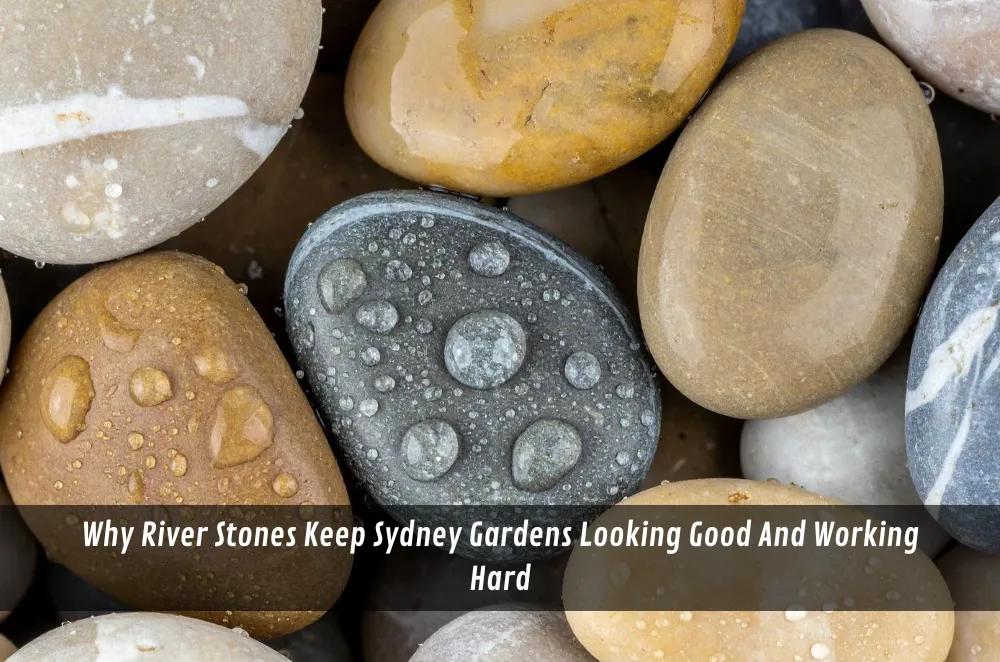
Natural river stones add style to Sydney yards.
Sydney yards are tough testing grounds. One week brings punishing sun off the harbour, the next dumps a month’s rain in a day. A planting scheme that survives that roller-coaster needs smart groundcovers, and river stones have quietly become the go-to fix. Before grabbing a bag of pebbles at the big-box nursery, here’s what to weigh up – appearance, drainage, plant health and the longer-term maintenance nobody loves to talk about. Early design choices pay you back for years.
More Than A Pretty Face
Gardeners often start with colour: creams that match sandstone walls, charcoal tones against coral-bark maples, mixed greys under a white frangipani. The bigger win hides underneath. A 50-mm layer of smooth stone:
Prevents rapid moisture loss by slowing air movement across soil.
Stops splash erosion that carves ruts around paths during summer storms.
Creates a physical snail barrier for prized edibles without chemical pellets.
Those outcomes happen only when the stone bed is deep enough, edged correctly and paired with a breathable weed mat. Slip in too thin a layer and you may as well leave bare dirt.
For readers looking to tie appearance to performance, browse these decorative river rock ideas that show how colour, depth and layout change drainage behaviour. Seeing real combinations helps avoid the “flat gravel pit” effect that dates a landscape overnight.
Why Size Matters
Pebble sizes sold as 10 mm, 20 mm or “oversize” aren’t marketing fluff. Smaller grades knit together, locking moisture in but also trapping leaf litter fast; larger stones drain better yet let sunlight through, heating the soil. A blended layer (20 mm base, 10 mm topping) balances both worlds for most Sydney microclimates.
Choosing The Right Stone For Local Conditions
Sydney stretches from salty sea spray in Coogee to clay basins in Baulkham Hills. Two quick checks keep the final look consistent:
pH compatibility: River stones are inert, yet underlying soils aren’t. In the Hawkesbury sandstone belt the ground runs slightly acidic, perfect for azaleas and camellias. Neutral stones won’t shift that balance. Western suburbs often lean alkaline; layer thickness should stay modest so citrus roots still touch native soil.
Heat load: Dark basalt pebbles absorb afternoon sun. They suit Mediterranean plant palettes but can scorch shallow-rooted natives. Lighter quartz or washed river mix stays cooler for lomandra and dianella mass plantings.
A Note On Sourcing
Stick to quarried or recycled river mix supplied through a reputable yard. Few homeowners realise it’s illegal to collect stones from waterways – fines are hefty and disturb habitat. Commercial stock is washed, graded and usually delivered in bulk bags that reduce plastic waste.
Installation Without The Drama
Weekend DIY kits promise “lay and walk away” convenience. In practice, labour sits roughly 70 percent in the prep, 30 percent in the pour.
Excavate 70–100 mm so the finished surface sits flush with paving. Leaving it proud looks messy and becomes a trip hazard along paths.
Compact and grade the base with a metal rake toward the garden edge or a concealed slot drain. Water must go somewhere.
Lay a breathable geotextile, overlapping seams by at least 100 mm. Skip plastic sheets – they trap water and suffocate soil biota.
Wheel in half the stone depth, rake level, then add the second pass from a lower drop height. Two lifts stop heavy stones punching holes in the fabric.
Edge in steel, aluminium or recycled-plastic strip to stop migration. A neat edge is the difference between pro and patchy.
The work is methodical rather than hard – but hire a plate compactor and keep a mate on the barrow if the load tops two cubic metres.
Where Stones Outperform Mulch And Gravel
Organic mulch, stone mulch, compacted gravel – each covers ground yet they behave differently. The table shows common yard scenarios.
Situation | Stone Mulch (20 mm river mix) | Organic Mulch (pine bark) | Compacted Gravel (road base) |
Heavy rain on sloping clay | Stays put, channels water evenly | Floats, clogs drains | Washes to low spots, fines block pits |
Bush-fire risk areas | Non-combustible | Ignites and embers smoulder | Sparks can lodge in fines |
Foot traffic to washing line | Comfortable underfoot, no mud | Compresses, sticks to shoes | Hard but dusty in drought |
Soil temperature in summer | Warmer than mulch but cooler than gravel | Cool, protects micro-life | Hottest surface, stresses roots |
Annual top-up needed | Rarely, colour holds | 1–2 times a year | Re-roll after every rain season |
Reading across, river stones sit in the pragmatic middle – they don’t feed worms like bark does, yet they don’t demand yearly barrow loads either.
Hardscape Harmony
A pebble carpet alone can look sterile. Stones earn their keep when they frame other textures – timber seating, Corten edging, sawn sandstone steppers. Achieving balance between planted softness and structural permanence echoes the broader principle of balancing hardscape and softscape that underpins most successful Sydney gardens. Keep three ideas front of mind:
Match stone colour with roof or fence tones so the yard feels deliberate.
Repeat the pebble elsewhere – a downpipe splash zone or pot topper – to stitch pockets together.
Use contrasting foliage. Fine-leaf lomandra swaying above chunky river pebbles gives movement missing in a monotone rock bed.
Designers also hide drip irrigation under the stones. Emitters deliver water straight to root balls, avoiding wind drift and meeting current Level 1 restrictions without fuss.
After-Care And Common Pitfalls
Stone is low-maintenance, not maintenance-free. Fallen jacaranda petals will compost between pebbles if left seasons on end, seeding onion weed and oxalis. A yearly leaf-blower sweep plus a quick rake keeps voids open. If ants start tunnelling, they’re telling you the layer is thin – top up before it becomes a highway.
For properties using river stones in bush-fire prone zones, keep layers under 50 mm and clear leaf litter monthly. Guidance from the official Planning for Bush Fire Protection framework references a similar threshold.
Stormwater rules are shifting too. Sydney Water now encourages permeable landscapes that slow runoff. Their grants for rain-gardens cite water-wise garden guidance from NSW Environment – river stones tick both visual and hydraulic boxes when paired with a trench drain or rain-garden inlet.
Minor colour fade appears after five or six high-UV summers. A light acid wash revives marbled whites; deeper greys hide dust naturally. Avoid coating stones in clear sealers that trap moisture beneath and create slippery film.
A well-laid river stone bed spares weekend hours otherwise spent re-mulching, keeps soil structure intact through Sydney’s binges of rain, and blends with everything from coastal natives to courtyard succulents. Set the foundations carefully and those pebbles will still be earning their keep long after the barbecue plates have cooled.